Our approach
We use qualitative methods — interviews, observation, careful
interpretation — and lean on grounded theory to let patterns emerge
from what people actually tell us, rather than testing hypotheses
we brought in from outside. Most of our studies start with a long
conversation and end with a great deal of re-reading and
re-thinking.
We are not trying to produce dashboards or benchmarks. The
questions we care about don't have numerical answers; they have
careful, considered ones.
Who we are
Principal researchers
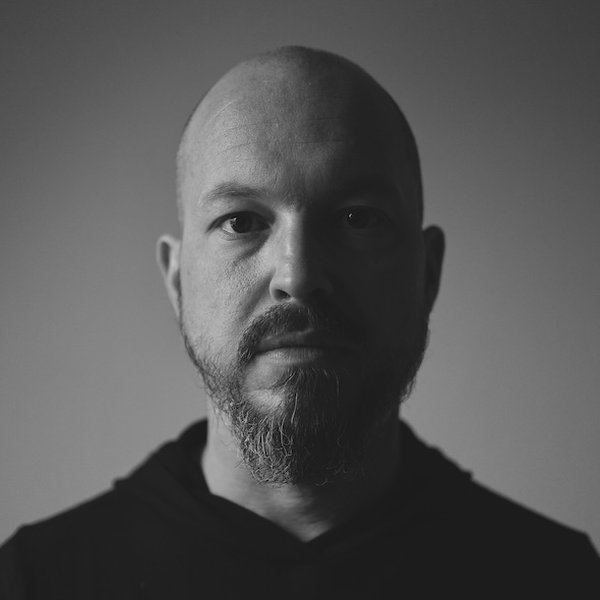
Dr. Leif Singer
Principal Researcher
Leif spent his PhD at Leibniz Universität Hannover studying how
software engineers adopt new practices, and how small,
carefully-designed nudges can shift habits without nagging. His
thesis was titled Improving the Adoption of Software
Engineering Practices Through Persuasive Interventions. He
then spent a year at the University of Victoria as a
postdoctoral research fellow, working on collaboration tools for
developers and running studies — including one on how developers
use Twitter.
After his postdoc he moved into industry. He has been building
for the web since 1996, working remotely since 2014, and is
currently a Senior Engineering Manager at Ghost, where he leads
a distributed engineering team. The questions that drew him into
research never quite left him. LESE Lab is the way he keeps
asking them.
Selected affiliations
- Ghost — Senior Engineering Manager (current)
-
University of Victoria — Postdoctoral Research Fellow
-
Leibniz Universität Hannover — Researcher and PhD Student
Research interests
Developer collaboration and tooling, remote and asynchronous
engineering practice, persuasive design, how engineering cultures
form and change over time.
Links
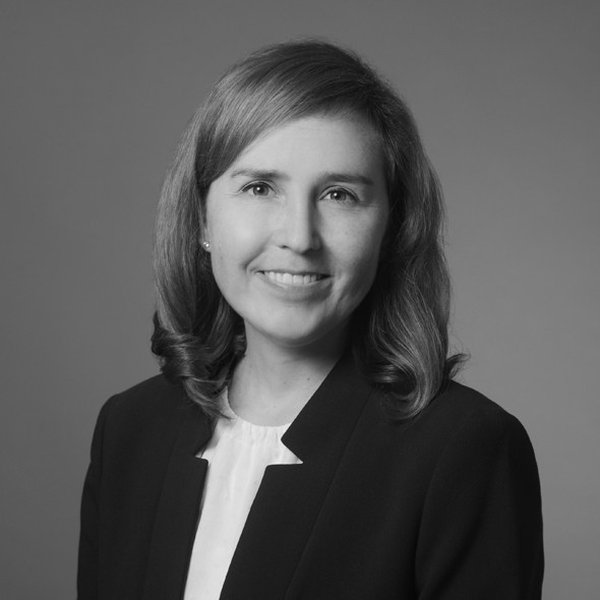
Dr. Sarah Köksal
Principal Researcher
Sarah is a qualitative researcher trained in cultural
anthropology and intercultural communication. Her PhD at LMU
Munich examined the lives of Chinese international students in
the United States — work that took her to UC Berkeley as a
visiting PhD student and gave her years of practice in the kind
of patient, immersive interviewing LESE Lab is built around.
She currently works as a Senior UX Researcher at HERO Software,
where she studies how people actually use the tools built for
them. Before HERO she was a postdoctoral researcher at TU
München. Earlier still, she conducted fieldwork on the German
expatriate community in Mongolia at the National University of
Mongolia.
Selected affiliations
- HERO Software — Senior UX Researcher (current)
- Technische Universität München — Postdoctoral Researcher
-
Ludwig-Maximilians-Universität München — PhD, Cultural
Anthropology
- University of California, Berkeley — Visiting PhD Student
- National University of Mongolia — Researcher
Research interests
Qualitative research methods. Identity, belonging, and how people
make sense of unfamiliar environments — themes from her earlier
fieldwork that translate naturally to studying software work as
a culture and a craft.
Links
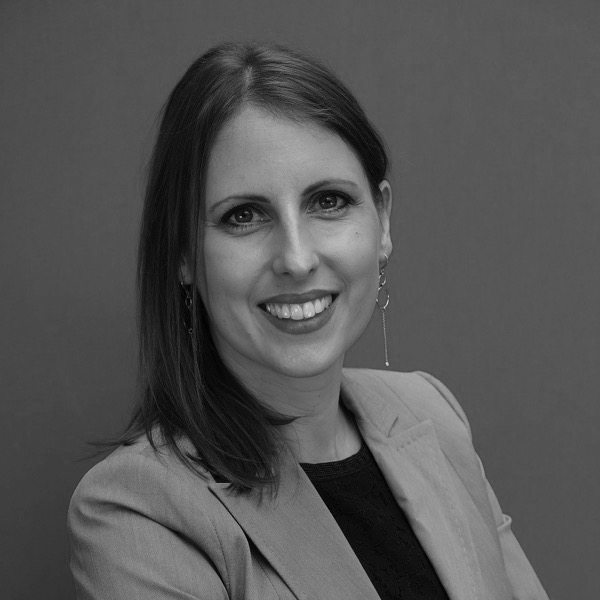
Dr. Michaela Greiler
Principal Researcher
Michaela earned her PhD in software engineering at TU Delft in 2013,
with a thesis on understanding the test suites of large, modular
systems — Test Suite Comprehension for Modular and Dynamic
Systems. She went on to Microsoft Research and Microsoft, where
she worked alongside the Office, Visual Studio, Windows, and Exchange
teams on how real engineers test, review, and build software at scale.
Much of her published research — more than a dozen peer-reviewed
papers — looks closely at code review: what makes it work, what makes
it painful, and what it does to the people doing it.
Today she runs Codalytics, an independent practice through which she
helps engineering organizations improve their code review, developer
experience, and quality practices. She hosts the Software Engineering Unlocked
podcast, and maintains her knowledge hub Awesome Code Reviews. Her instinct for taking
the everyday mechanics of software work seriously — and asking how they
feel from the inside — is exactly what LESE Lab is about.
Selected affiliations
- Codalytics — Founder & Principal Consultant (current)
- DX — Head of Research
- Microsoft Research — Researcher
- Microsoft — Software Engineer
-
Technische Universiteit Delft — PhD, Software Engineering
Research interests
Code review practices and effectiveness; developer experience and
productivity; software testing and test quality; empirical software
engineering; and how engineering teams build, review, and maintain
software — including how AI is reshaping that work.
Links
Advisors
Our work benefits from the advice of Dr. Felienne Hermans. Her
research on how people learn to program adds an important
perspective to our current study of professional developers
taking on unfamiliar ways of working.
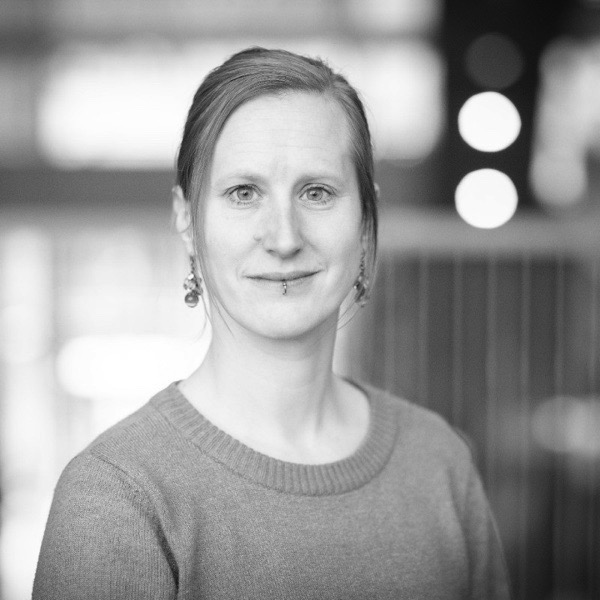
Dr. Felienne Hermans
Advisor
Felienne earned her PhD at TU Delft in 2013, developing
algorithms to find errors in spreadsheets and visualise their
hidden dependencies — research she spun out into a company,
Infotron, whose clients included PwC, KLM/Air France, and
Tennet. She held professorships at TU Delft and Leiden, and
since 2022 has been Professor of Computer Science Education at
Vrije Universiteit Amsterdam.
Her more recent work asks how we define "programming" in the
first place, and how those inherited definitions shape who gets
to take part. She created Hedy, a programming language that lets
children learn to code in their own natural language, and wrote
The Programmer's Brain (Manning), on how programmers
read and reason about code. One day a week she teaches computer
science at a high school in Amsterdam — a practice she has kept
up since 2018.
Selected affiliations
-
Vrije Universiteit Amsterdam — Professor of Computer Science
Education (current)
-
Open Schoolgemeenschap Bijlmer, Amsterdam — High School CS
Teacher (current, one day a week)
- Universiteit Leiden — Associate Professor
-
Technische Universiteit Delft — Assistant Professor; PhD,
Computer Science
-
University of Cambridge, Darwin College — Visiting Researcher
Research interests
Computer science education and how people learn to program;
programming language design; the cognitive and linguistic side
of writing code; and how inherited definitions of "programming"
shape who gets to take part in software work.
Links
How we work together
LESE Lab is small on purpose. Most of our work happens in long
conversations — about transcripts, about half-formed ideas, about
what we're still missing. We treat interpretation as a craft and a
shared activity, and we're suspicious of any process that pretends
qualitative research can be done quickly.
We are an independent, non-accredited research group. We are not
affiliated with any university, and we do not seek to be one. That
independence lets us pursue questions on their own merits and at
their own pace.